Introduction
Choosing the right kitchen sink is more than just a design decision it’s about functionality, efficiency, and long-term value. Among modern homeowners and interior designers, Quartz Kitchen Sinks have become a preferred choice for their durability, elegant aesthetics, and easy maintenance. But when it comes to selecting between Single Bowl and Double Bowl Sinks, many find themselves at a crossroads.
Your choice affects your cooking workflow, cleaning habits, and even the overall layout of your countertop space. This blog explores the key differences between single and double bowl quartz sinks to help you make an informed decision. Whether you’re upgrading your existing kitchen or designing a new one, understanding these differences will ensure you pick the perfect fit for your lifestyle.
What Makes Quartz Kitchen Sinks So Popular?
Before diving into the comparison, it’s worth understanding what makes a quartz composite sink such a favorite in modern homes.
Quartz sinks are engineered by combining natural quartz stone with resin binders. This results in a non-porous, highly durable surface that resists stains, scratches, and heat. From black quartz sinks that add bold contrast to white quartz sinks that offer timeless elegance, there’s a style for every kitchen aesthetic.
Key Benefits of Quartz Sinks:
-
High Durability: Resistant to cracks and chips.
-
Stain Resistance: Ideal for daily kitchen use and heavy cooking.
-
Noise Reduction: Naturally quieter than stainless steel sinks.
-
Hygienic Surface: Non-porous and easy to clean.
-
Stylish Options: Available in matte, glossy, and stone finishes.
Whether you opt for a quartz undermount sink or a drop-in design, quartz sinks blend seamlessly with quartz countertops and sinks for a cohesive, high-end look.
What Is a Single Bowl Quartz Kitchen Sink?
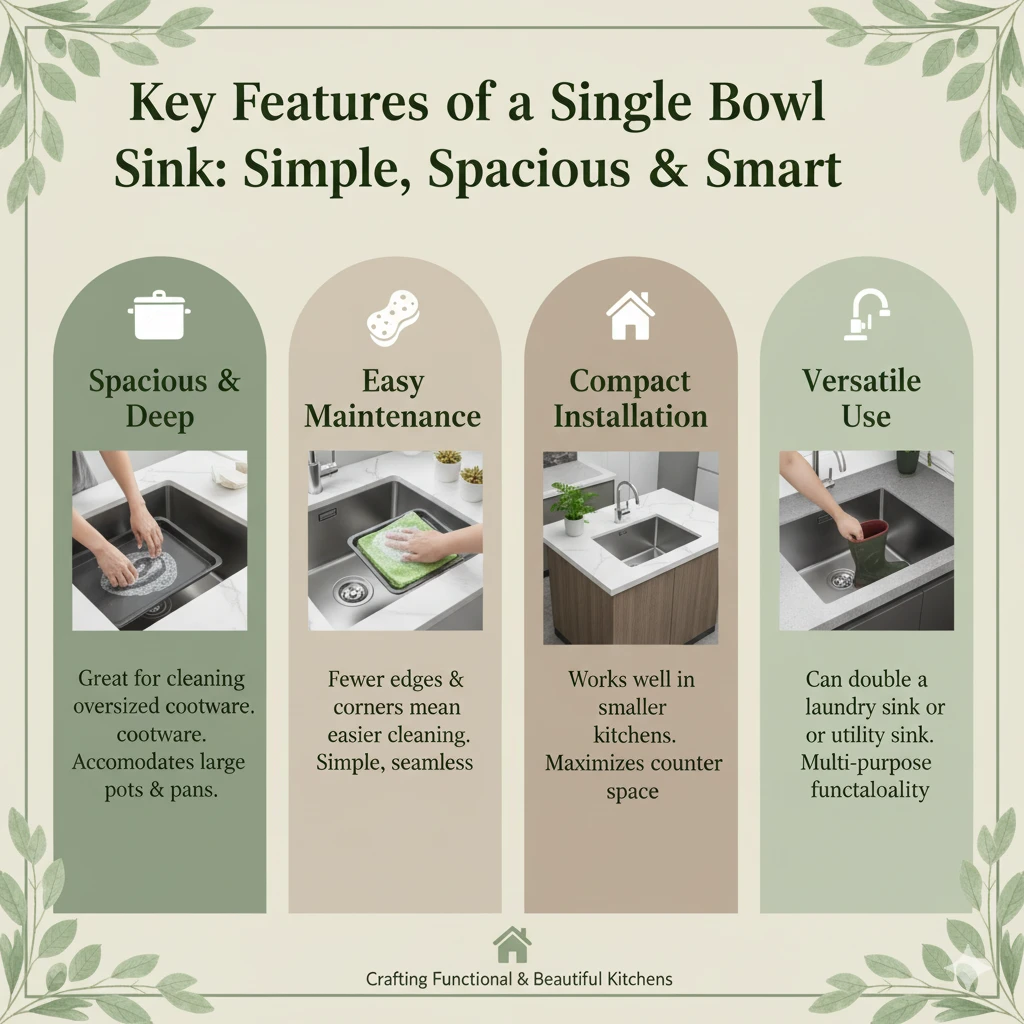
A single bowl kitchen sink features one spacious, uninterrupted basin no dividers, just easy access. Standard single bowl quartz kitchen sinks range from compact (15x18 inches) to generous sizes over 21 inches wide and 8–10 inches deep, accommodating even oversized cookware. Many choose a single sink for its sleek silhouette, minimalist feel, and ability to fit beautifully into modern kitchen designs. Single bowl kitchen sinks are the preferred option in small to medium kitchens, homes with frequent large cooking, and for those desiring a streamlined cleaning routine. Styles include the classic one bowl kitchen sink, undermount models for seamless quartz countertops and sinks integration, and statement-making deep single basins.
Key Features of a Single Bowl Sink:
-
Spacious & Deep: Great for cleaning oversized cookware.
-
Easy Maintenance: Fewer edges and corners mean easier cleaning.
-
Compact Installation: Works well in smaller kitchens.
-
Versatile Use: Can double as a laundry sink or utility sink.
Best For: Small to medium-sized kitchens, minimalists, and those who prefer a clean, uncluttered workspace.
Example: A single bowl quartz kitchen sink in matte black adds elegance to compact kitchens while maximizing usable space.
What Is a Double Bowl Quartz Kitchen Sink?
With two separate basins, double bowl kitchen sinks are champions of multitasking. They’re available in equal split (50/50), offset (60/40, 70/30), and innovative low-divider layouts. Quartz double bowl kitchen sink options include black double sink, double undermount sink, and versatile models for large families and traditional kitchens. Each basin is slightly smaller than a single bowl alternative, but the extra compartment offers dedicated zones for food prep, washing, rinsing, or even laundry double sink use. Many homeowners love the familiarity and efficiency of double bowl sinks, especially when hand-washing dishes and separating food types.
Key Features of a Double Bowl Sink:
-
Multifunctional Design: Ideal for multitasking.
-
Organized Workflow: Separate spaces for cleaning and prepping.
-
Flexible Use: One side can hold dirty dishes, while the other remains free for use.
-
Time-Saving: Efficient for busy kitchens.
Best For:Larger families, home cooks, or anyone who prefers multitasking while cooking.
Example: A black double kitchen sink paired with a quartz countertop creates a modern, practical kitchen setup.
Single vs Double Bowl Quartz Sinks: A Detailed Comparison
| Feature |
Single Bowl Sink |
Double Bowl Sink |
| Space Efficiency |
Takes less counter space |
Requires wider countertop |
| Ease of Cleaning |
Easier, single basin |
Slightly more maintenance |
| Functionality |
Ideal for large pots/pans |
Better for multitasking |
| Installation Options |
Suitable for compact kitchens |
Best for large kitchens |
| Design Aesthetic |
Sleek and minimal |
Structured and professional |
| Cost Factor |
Generally more affordable |
Slightly higher cost due to complexity |
Whether you choose a one bowl kitchen sink or a two bowl kitchen sink, it’s essential to balance style with practicality.
What Are the Advantages of Single Bowl Sinks?
-
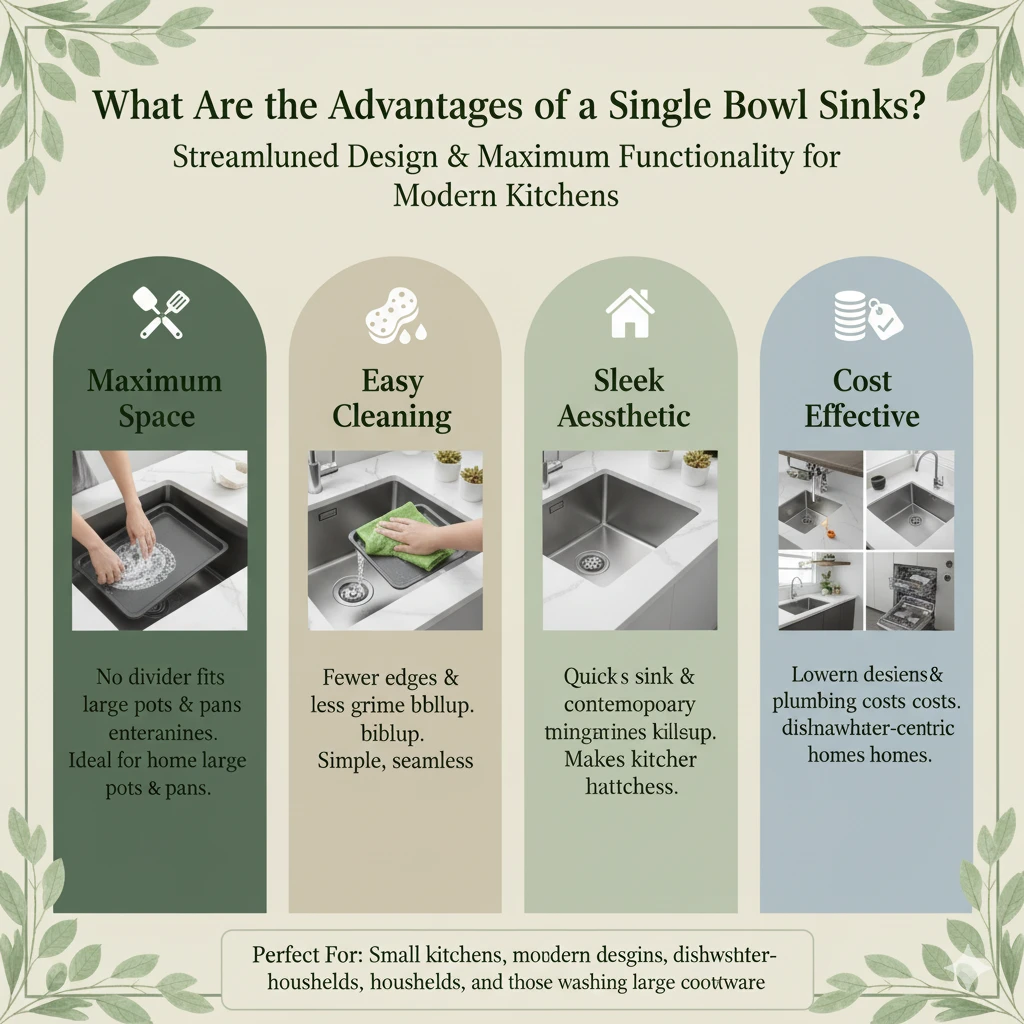
Maximum Space: No divider means the entire basin fits large pots, pans, and baking sheets a must for home bakers and frequent entertainers.
-
Easy Cleaning: Fewer corners and edges make a single bowl kitchen sink quicker to clean, with less grime buildup or maintenance.
-
Sleek Aesthetic: Their minimalist design appeals to lovers of contemporary decor and makes any kitchen feel more open.
-
Installation Benefits: Single bowl quartz sinks are usually easier to install, especially as quartz undermount sink options.
-
Cost Effective: Fewer parts mean lower sink and plumbing costs, with less complexity for installers.
-
Best For: Small kitchens, couples, modern designs, dishwasher-centric households, and those washing large cookware.
What Are the Advantages of Double Bowl Sinks?
-
Multitasking: Separate bowls mean soaking one side, washing on the other a favorite for multitaskers and those managing large dish loads.
-
Food Safety: Use one basin for raw meats and the other for vegetables to avoid cross-contamination.
-
Efficient Workflow: Families or amateur chefs enjoy organizing kitchen tasks using two sides.
-
Versatility: Multiple accessories, faucet types, and configurations make double bowl sinks highly adaptable, especially in busy kitchens.
-
Classic Appeal: Double bowl kitchen sinks fit traditional homes, boosting resale value and family-friendly use.
-
Best For: Large families, home cooks, multitaskers, and those who prefer hand-washing.
How Do Size and Space Considerations Affect Your Choice?
-
Single Bowl: Best for cabinets at least 24–30 inches wide. Depths commonly range 8–10 inches. Great for maximizing basin volume in tight layouts.
-
Double Bowl: Usually needs a cabinet base of 36 inches or more. Each compartment may be 7–10 inches deep, with wider setups (42 inches+) for large spaces.
-
Measuring Tips: Always check cabinet, countertop, and plumbing space before purchase. Consider clearance for faucets and accessories, and match features to daily workflow for the most efficient kitchen triangle.
Which Sink Configuration Fits Your Lifestyle Best?
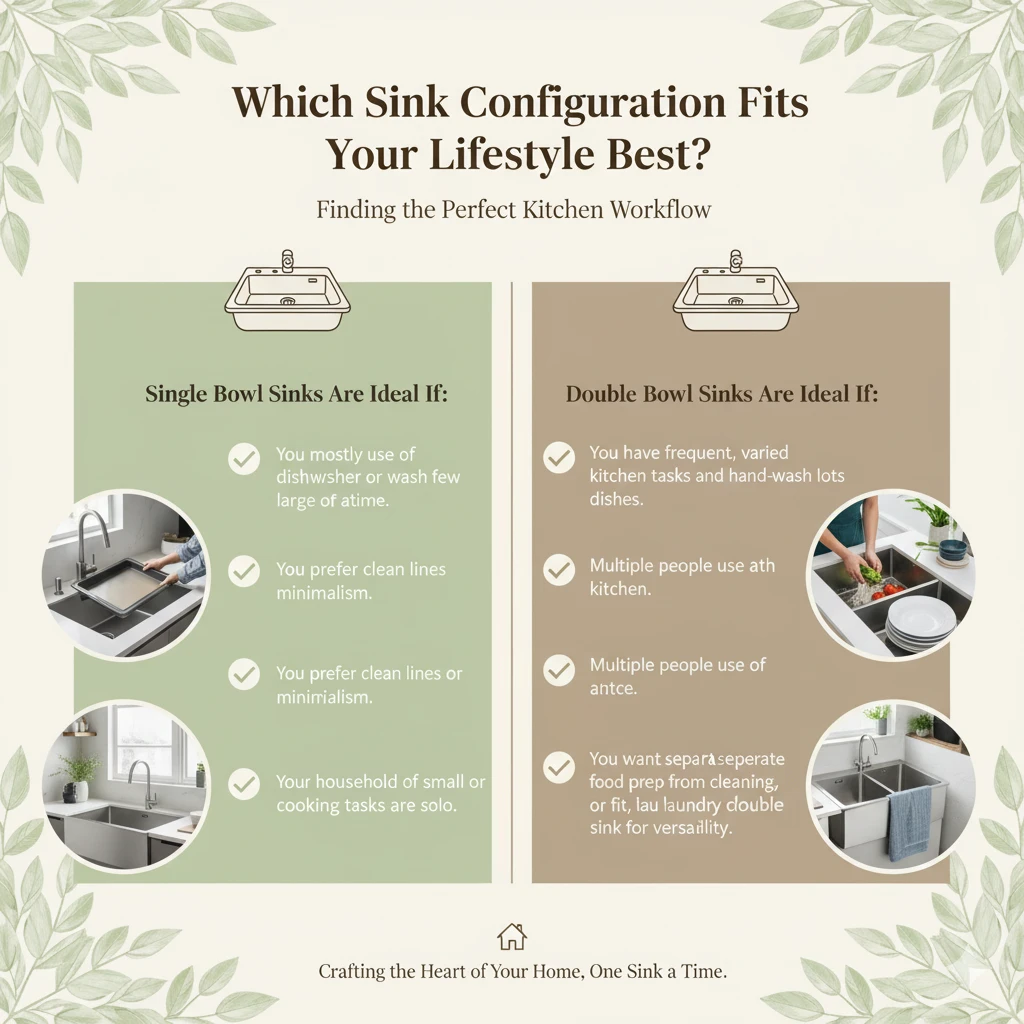
Single Bowl Sinks Are Ideal If:
-
You mostly use a dishwasher or wash a few large items at a time.
-
You prefer clean lines and minimalism.
-
Your household is small or cooking tasks are solo.
Double Bowl Sinks Are Ideal If:
-
You have frequent, varied kitchen tasks and hand-wash lots of dishes.
-
Multiple people use the kitchen at once.
-
You want to separate food prep from cleaning for safety, or fit a laundry double sink for versatility.
How Do Installation Types Affect Single vs Double Bowl Choice?
-
Undermount Sinks: Quartz undermount sink and double undermount sink models give a seamless counter look, but require professional installation especially for double bowls, which need extra support.
-
Drop-In Sinks: Easier for DIY and retrofits; often more affordable and versatile, but can have higher rim maintenance.
-
Flush-Mount Options: For a contemporary look, suitable for both configurations but often require custom cabinetry.
What Is the Cost Comparison Between Single and Double Bowl Quartz Sinks?
-
Single Bowl Sinks: Usually less expensive, starting around ₹7,000–₹18,000 for standard sizes. Installation is simpler, generally ₹4,000–₹10,000 depending on complexity.
-
Double Bowl Sinks: Typically cost more ₹12,000–₹30,000+ and installation may run higher due to added plumbing and support needs.
-
Premium Finishes: Black quartz sink and custom quartz composite kitchen sink options may carry a higher price tag.
-
Long-Term Value: Quartz is durable, low-maintenance, and retains a polished look, regardless of configuration.
How Does Maintenance Differ Between Single and Double Bowl Sinks?
-
Single Bowl: Fast wipe-down, fewer crevices, no divider to clean making routine upkeep easier.
-
Double Bowl: Requires cleaning both compartments and the divider, which can collect grime.
-
Color Care: Black double kitchen sink models hide water spots well, while white quartz sink options may require extra stain prevention.
-
All Quartz Sinks: Non-porous surfaces prevent bacterial buildup for excellent hygiene with low maintenance.
Which Configuration Works Best for Different Kitchen Styles?
-
Modern Kitchens: Single bowl quartz kitchen sinks for seamless, open surfaces and design flexibility.
-
Traditional Kitchens: Double bowl kitchen sink for a functional, timeless look and efficient multitasking.
-
Small Galley Kitchens: Compact single bowl or offset double bowls (60/40 split) maximize space.
-
Large Gourmet Kitchens: Either full-size double or oversized single basin with quartz sink undermount for prep sinks and serious cooking versatility.
What Do Experts Recommend?
Kitchen designers and plumbing professionals recommend choosing quartz kitchen sinks for best durability, hygiene, and aesthetics. Many now favor single bowl models for modern households and double bowl for multi-cook or large family setups. The trend is toward customized options a shift away from “one size fits all,” focusing on the synergy between workflow, design, and personal habits.
How to Make Your Final Decision
-
Assess cabinet size, workflow, and cooking habits.
-
Consider color and style: black quartz sink for drama, white quartz sink for classic simplicity, and more.
-
Calculate both upfront and long-term costs, including installation and maintenance needs.
-
Visualize usage: Visit showrooms, simulate daily tasks, and consult all household members.
-
Confirm professional installation needs for quartz sink undermount or double bowl setups.
Explore Quartz Sink Options
Conclusion
There is no universal “best” choice when it comes to quartz kitchen sinks. Single bowl sinks excel in modern, minimalist kitchens and oversized cookware handling, while double bowl sinks offer multitasking and organization for busy households. Consider your kitchen size, family needs, workflow, and maintenance preferences when deciding. Investing in quality quartz composite kitchen sinks, whether single or double bowl, ensures long-term durability, style, and satisfaction. Measure your space, evaluate your lifestyle, and choose confidently the right sink will future-proof your kitchen and elevate your cooking experience.



 Live Photos & Videos