Square, hexagon, and basket weave mosaics can all give a room a premium finish. Yet each pattern creates a different mood and comes with its own layout needs. Square mosaics are simple and flexible. Hexagon mosaics add modern movement. Basket weave designs bring classic detail.
“Hexa mosaic tiles” are more often called hexagon mosaic tiles. In this guide, you will learn how these three options compare in kitchens, bathrooms, showers, and modern homes. You will also find practical advice on materials, grout, installation, and care.
Which Mosaic Tile Pattern Is Best?
The best mosaic tiles pattern depends on the room, surface, design style, and level of upkeep you prefer. No single pattern is right for every project.
The quick recommendation
Best all-round choice: Square mosaic tiles
Best for modern homes: Hexagon mosaic tiles
Best for decorative bathrooms: Basket weave mosaic tiles
Best for simple layout planning: Square mosaics
Best for visual movement: Hexagon mosaics
Best for classic character: Basket weave mosaics
Best for curved or sloped shower floors: Small mosaics approved for that use
Square, Hexagon and Basket Weave at a Glance
Square mosaic tiles
Style: Clean, balanced, and versatile
Best uses: Kitchen backsplashes, shower walls, niches, and floors
Installation: Usually straightforward, although uneven grout lines are easy to notice
Care: Simple to coordinate and clean with the right grout
Hexagon mosaic tiles
Style: Geometric, dynamic, and contemporary
Best uses: Bathroom floors, showers, feature walls, and niches
Installation: Needs careful alignment and more detailed perimeter cuts
Care: Extra grout joints may need more routine cleaning
Basket weave mosaic tiles
Style: Detailed, classic, and luxurious
Best uses: Powder rooms, bathroom floors, decorative insets, and accents
Installation: More sensitive to borders, thresholds, and pattern breaks
Care: Detailed grout joints need careful cleaning
Square vs hexagon mosaic tile pattern
Square tiles form an orderly grid that works well with straight walls and cabinets. Hexagons soften those straight lines and create more visual movement. In a hexagon vs square mosaic tiles comparison, square feels calmer, while hexagon makes a stronger design statement.
Where basket mosaic tile works best
A basket mosaic tile looks best where enough of the woven pattern stays visible. It may lose its impact if cabinets, fixtures, or awkward cuts cover most of the surface. Open bathroom floors, framed backsplash panels, and controlled accent areas are good options.
Comparing the Main Mosaic Tile Patterns
Square mosaics: simple and adaptable
Square mosaic tiles suit minimalist, industrial, traditional, and contemporary rooms. Their clean lines also coordinate well with subway mosaic tiles and larger wall tiles. You can use them on a kitchen backsplash, shower wall, niche, or suitable bathroom floor.
Grout has a major effect on the final look. Matching grout makes the surface feel smooth and quiet. Contrasting grout highlights every square and creates a bold grid. Straight lines help with planning, but they can also expose poor sheet alignment.
For example, a compact white kitchen can use glossy square ceramic mosaic tiles with pale grout. The finish reflects light, while the simple grid keeps the backsplash from looking too busy.
Hexagon mosaics: geometric and modern
Hexagons create a honeycomb effect with more energy than a square grid. They are popular among modern mosaic tiles for bathroom floors, shower niches, feature walls, and decorative backsplashes.
Small hexagons can follow some slopes and transitions well, which can be useful on a properly designed shower base. However, cuts around edges and corners need care. Installers must also watch the spacing between sheets so visible seams do not appear.
Matte porcelain hexagons with medium-gray grout can give a bathroom a modern look. A mid-tone grout may also hide everyday marks better than bright white grout. Hexagons work especially well with concrete, stone, or marble look mosaic tiles.
Basket weave mosaics: detailed and timeless
Basket weave mosaic tiles use small rectangular pieces to create an interlocking, woven effect. The pattern suits traditional, transitional, Art Deco, and boutique-hotel interiors. It often works as a focal floor, shower accent, or decorative inset.
Careful dry layout is important. The pattern should remain continuous near walls, borders, drains, and thresholds. Complex cuts may disturb the woven effect, so the room should be measured before the final layout begins.
Basket weave has more visual detail than square or hexagon tile. Pair it with plain wall tiles, simple fixtures, and restrained colors. This lets the pattern stand out without making the room feel overdesigned.
What Is the Best Mosaic Tile Pattern for Each Room?
Best mosaic tile pattern for kitchens
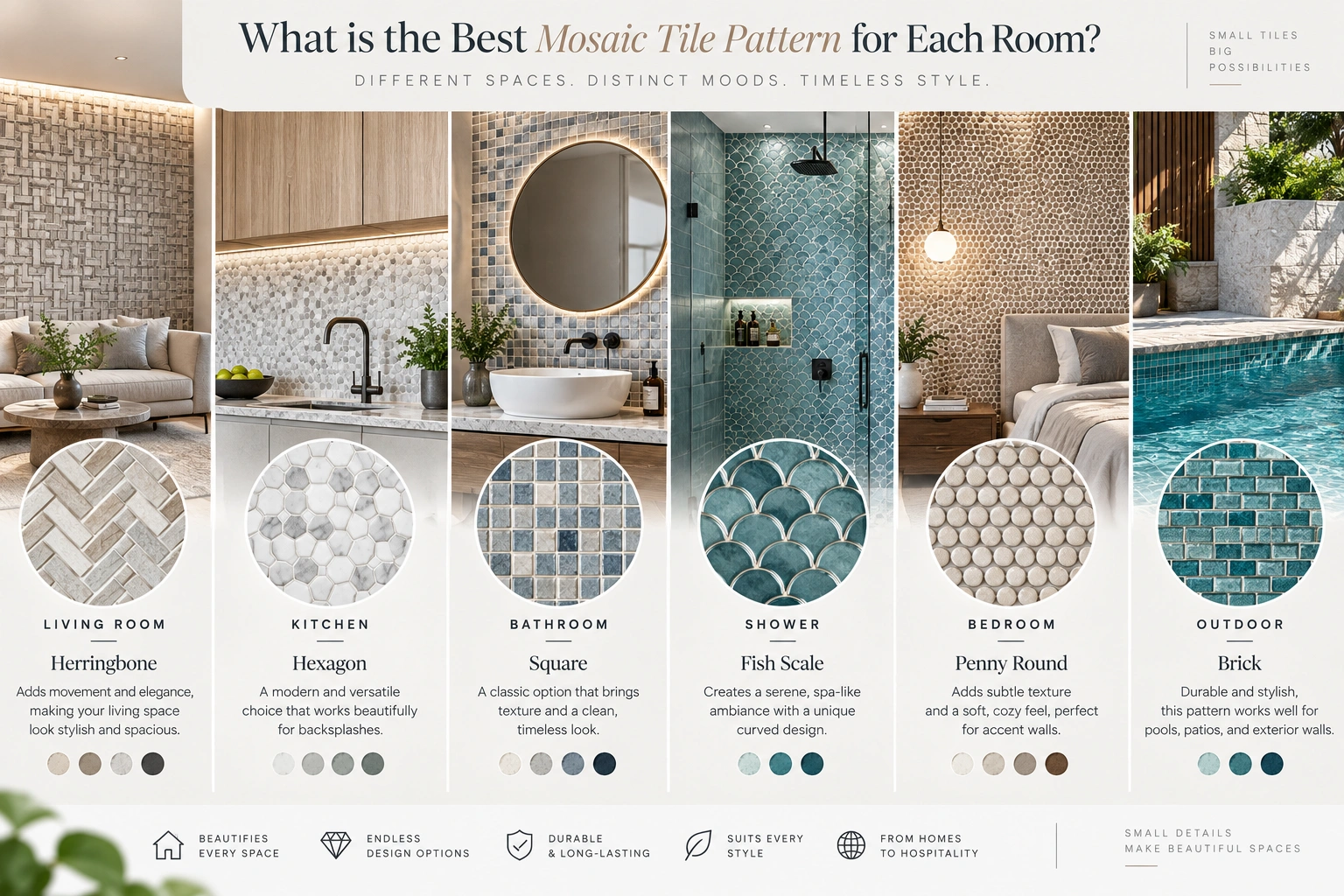
Square mosaics are often the easiest choice for a kitchen backsplash mosaic. They fit many cabinet styles and do not compete with busy countertops. Hexagons create a stronger focal point in a modern kitchen.
Basket weave can work well behind a range or within a framed panel. Choose an easy-clean surface and grout that suits cooking areas. The best mosaic tile pattern for kitchens should balance appearance with daily cleaning needs.
Which pattern works best on bathroom floors?
Small square and hexagon mosaics suit compact floors and detailed transitions. Basket weave adds premium character to powder rooms and larger bathrooms. In every case, confirm that the exact product is approved for floor and wet-area use.
Do not assume that every small tile is slip-resistant because it has more grout joints. Slip performance also depends on the tested surface, water, cleaning products, maintenance, and installation quality.
Is basket weave mosaic tile good for bathrooms?
Yes, a basket weave mosaic tile for bathrooms can be a strong choice. The tile material, finish, technical rating, waterproofing system, and installation method must suit the intended surface. A wall product should not be used on a floor unless it is rated for that use.
Best pattern for shower walls and niches
Square mosaics provide a clean, coordinated look. Hexagons make shower niches and statement walls more noticeable. Basket weave is often best as a controlled accent rather than across every surface.
Shower wall mosaic tiles are only the visible finish. A suitable waterproofing system, compatible adhesive, correct drainage, and required movement joints are also vital.
Best choice for small rooms
Grout close to the tile color reduces visual breaks and can make a small surface feel more continuous. Small patterns add detail without needing a large feature area. Using the same bathroom floor mosaic tiles in selected zones can also create a more cohesive design.
Ceramic, Porcelain or Marble Look Mosaics?
Ceramic mosaic tiles
Ceramic mosaics come in many colors, glazes, and decorative finishes. They are often selected for walls and backsplashes. However, ceramic products do not all have the same performance. Check whether the exact tile is approved for floors, showers, or other wet locations.
Porcelain mosaic tiles
Porcelain is defined by low water absorption under relevant standards. It is often chosen for demanding floors and wet areas. Porcelain mosaic tiles are also available in concrete, stone, and marble-look finishes. Product suitability still depends on its rating and surface finish.
Natural stone and marble-look options
Natural stone offers unique color and veining, but it may need sealing and specialist care. Marble-look porcelain can create a similar mood with simpler routine maintenance. Before buying, check shade variation, chemical resistance, and cleaning instructions.
Are mosaic tiles slip-resistant?
Some slip-resistant mosaic tiles are designed and tested for specific uses, but appearance and size are not proof of safety. Review the manufacturer’s technical data and applicable project standards. ANSI A137.1, ISO 13006, EN 14411, and installation guidance from TCNA or NTCA may be relevant.
Installation, Grout and Maintenance Best Practices
How do you prevent visible mosaic sheet lines?
Dry-lay several sheets before installation.
Compare the spacing between sheets with the joints inside each sheet.
Offset or interlock sheets when the product design allows it.
Prepare a flat, stable substrate.
Use a suitable adhesive and notched trowel.
Avoid pushing adhesive into the grout joints.
Adjust sheets while the adhesive remains workable.
Check the layout from a normal viewing distance.
Good mosaic tile sheet installation depends on preparation. A small spacing error can repeat across the whole wall or floor. Installation materials and methods should follow product instructions and relevant ANSI A108, A118, or A136.1 guidance where applicable.
Choosing grout color for mosaic tiles
Matching grout produces a calmer, more continuous finish. Contrasting grout defines geometric tile patterns and makes each piece more visible. Mid-tone grout is often forgiving in kitchens and busy bathrooms.
Make a sample board before making the final choice. Grout color can change how warm, cool, bright, or dark the tile appears.
Useful mosaic tile maintenance tips
Use a manufacturer-approved, pH-appropriate cleaner.
Avoid harsh abrasives on polished or glossy surfaces.
Repair damaged grout or sealant without delay.
Follow sealing guidance for natural stone and cement-based grout.
Ventilate showers and remove soap residue regularly.
Test any new cleaner on a small, hidden area first.
When should you hire an installer?
Professional installation is wise for sloped shower floors, waterproofed wet rooms, natural stone, detailed basket weave borders, and difficult pattern transitions. A skilled installer can also reduce visible sheet lines and improve edge details.
Modern Mosaic Tile Ideas and Buying Checklist
Mosaic tile design ideas for modern homes
Use matte black hexagons with charcoal grout for a bold floor.
Pair white square mosaics with tone-on-tone grout for a quiet backsplash.
Combine marble-look basket weave with simple wall tiles.
Mix matte and glossy pieces for subtle decorative mosaic wall tiles.
Other contemporary mosaic tile trends include penny round mosaic tiles, herringbone mosaic design, and compact subway mosaic tiles. Choose one main pattern so the room feels connected rather than crowded.
How to evaluate a mosaic tile manufacturer or exporter
A dependable mosaic tile manufacturer or mosaic tile exporter should provide clear product information. Before ordering premium mosaic tile patterns, ask for:
Material and water-absorption classification
Approved wall, floor, shower, or exterior applications
Available performance and slip-resistance documents
Sheet size, thickness, shade variation, and calibration details
Mesh and adhesive suitability for the planned application
Samples from current production
Minimum order, lead time, packaging, and breakage terms
Export documents, installation guidance, and care instructions
Visit Megan Cera to review its available mosaic options and request current product specifications. Compare verified technical details with your project needs before selecting a material, pattern, or finish.
The best mosaic tiles pattern is the one that fits your room and daily needs. Choose square for versatility and simple coordination. Select hexagon for movement and a modern edge. Use basket weave when you want timeless detail and a clear focal point.
Before ordering, confirm the tile’s intended use, finish, technical performance, grout needs, and installation method. A well-chosen pattern is important, but sound preparation and verified product data are what help the finished surface stay attractive and practical.
Frequently Asked Questions
1. Which mosaic tile pattern is best?
Square is the most versatile choice. Hexagon offers a modern geometric look, while basket weave suits decorative and classic interiors. The best option depends on the room, surface, maintenance needs, and the amount of visual detail you want.
2. Are square or hexagon mosaic tiles easier to install?
Square mosaics are usually easier to plan around straight walls and corners. Hexagon sheets need more care at perimeters and sheet joints. Difficulty also depends on sheet quality, substrate flatness, room shape, and installer experience.
3. Is basket weave suitable for shower floors?
It can be suitable if the exact product is approved for shower-floor use. Check its material, finish, technical data, waterproofing system, drainage plan, and local requirements. Never choose it based on appearance alone.
4. What grout color makes mosaics look larger?
Grout close to the tile color softens grid lines and creates a more continuous surface. Contrasting grout outlines every piece, making the pattern look stronger and busier. Test both options before installation.
5. Are porcelain mosaics better than ceramic mosaics?
Not in every case. Porcelain’s low water absorption may suit demanding areas, while ceramic offers many colors and decorative finishes. Select the product according to its tested application, finish, and care needs rather than the material name alone.





 Live Photos & Videos