Choosing the right staircase tile is one of the most critical decisions when designing or renovating your home because it affects not only the safety and durability of your stairs but also the overall visual appeal and functionality of the space. A staircase is a central architectural feature that connects multiple levels, serves as a key element of interior design, and is a surface that sees constant use daily. Selecting inappropriate materials may lead to frequent repairs, slips, or an outdated look, whereas choosing the right tiles can combine long-term durability, safety, and style seamlessly.
Whether you are upgrading indoor steps, creating a luxurious outdoor staircase, or installing tiles for the stairs in a newly built home, understanding the properties of different materials ensures you get the perfect combination of functionality and aesthetics. Selecting exterior staircase tiles or outdoor stair tile can significantly enhance the look, safety, and durability of your stairs. The right choice turns a staircase into a striking focal point that enhances your home’s overall atmosphere and ensures long-lasting beauty and reliability.
Why Choosing the Right Staircase Tile Matters
The type of staircase flooring tiles you choose impacts multiple aspects of your home and everyday life, making it essential to evaluate safety, durability, and design together:
Safety: Stairs are inherently high-risk areas where slips and falls can happen, especially in homes with children, elderly residents, or pets. Using tiles with anti skid tiles for staircase properties provides better grip, reduces accidents, and increases confidence while walking, even in wet or high-traffic areas. Outdoor steps, entrances, and staircases near pools particularly benefit from textured finishes, which improve traction without compromising style.
Durability: Staircases are subjected to constant daily foot traffic, moving furniture, and occasional heavy loads. Choosing strong, resilient tiles such as porcelain or full body tiles ensures that the stairs remain in excellent condition over the years. Full body tiles for stairs and high-quality porcelain tile for stairs reduce the likelihood of chipping, cracking, or discoloration, saving homeowners from costly repairs and replacements.
Aesthetics: The staircase can serve as a visual centerpiece in your home. Carefully selected tiles, such as modern tiles for stairs, artistic tiled stair risers, or sidiyo ki tiles, add personality, depth, and style to the interior. A well-designed staircase enhances the harmony of your home’s design, reflects your personal style, and complements other decorative elements such as flooring, wall colors, or furniture.
Selecting the right tiles ensures that your staircase is safe, durable, and visually captivating, creating a lasting impression for guests and family members alike.
Popular Staircase Tile Materials
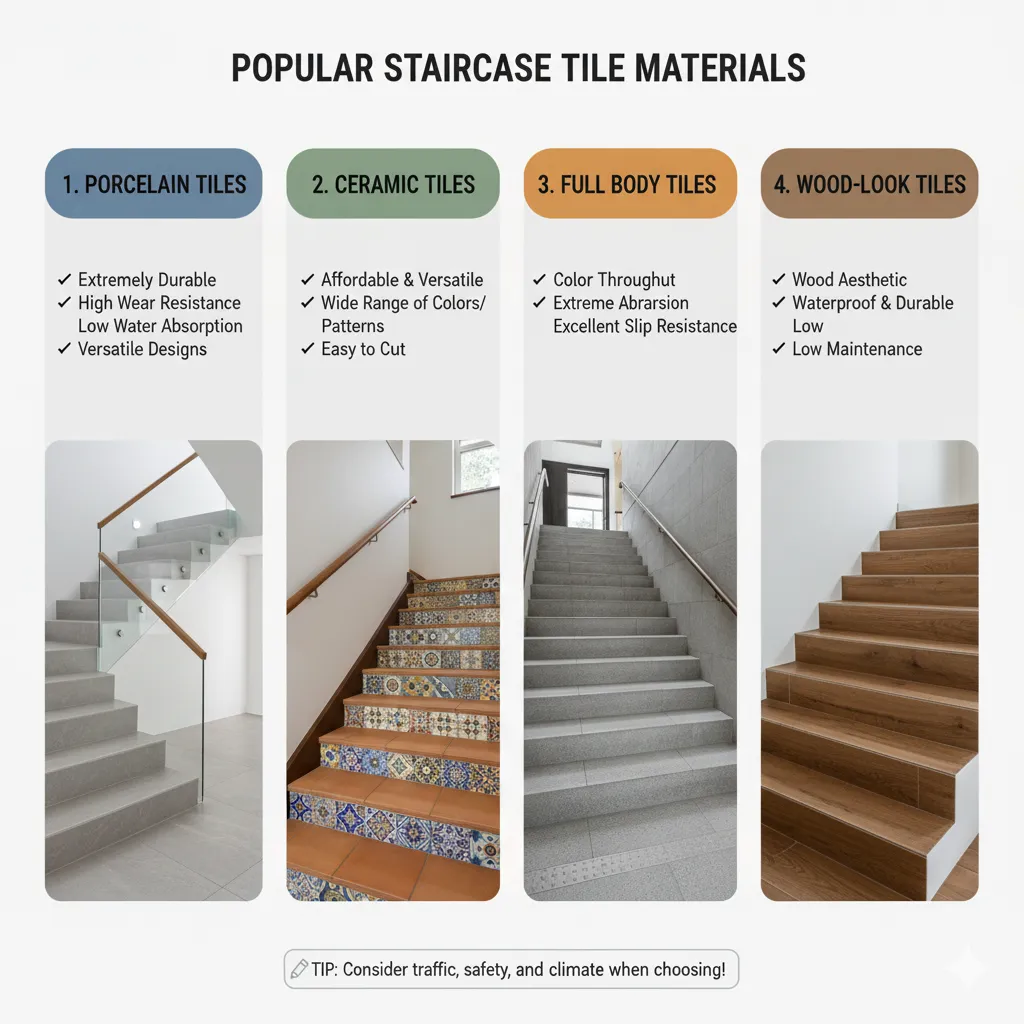
1. Porcelain Tiles
Porcelain tiles are widely recommended for staircases because they are dense, hard, and extremely durable, making them suitable for high-traffic areas both indoors and outdoors. Their water-resistant properties also make them ideal for staircases exposed to moisture or changing weather conditions.
Pros: Highly durable, resistant to scratches and stains, easy to clean, and available in various finishes to suit any design style.
Best for: Indoor staircases in busy homes, outdoor steps, terraces, or any staircase that faces heavy foot traffic.
Why homeowners choose them: Porcelain tiles can replicate the look of natural stone, marble, or wood, providing a luxurious finish without the need for high maintenance or refinishing. Their versatility allows them to complement modern, traditional, or contemporary home designs.
Porcelain tiles can also be customized in matte, polished, or textured finishes, which allows homeowners to achieve the perfect balance between aesthetic appeal and practical safety for each step. These porcelain stairs are considered among the best tiles for staircase applications due to their durability and elegance. Grey porcelain tiles or white porcelain tiles or black porcelain tile variants offer versatile design options for modern interiors and outdoor steps.
2. Ceramic Tiles
Ceramic tiles are a popular and cost-effective choice for tiles for stairs indoor, because they’re lightweight, easy to handle, and simple to install, even for more intricate layouts. They’re available in an extensive variety of colors, patterns, textures, and finishes, making it easy for homeowners to match any décor style from contemporary to traditional. Their smooth but slightly textured surfaces also help maintain a comfortable and safe walking experience indoors.
Pros: Affordable, versatile, easy to cut and shape for creative designs, and available in numerous decorative options.
Best for: Indoor staircases where aesthetic flexibility and design creativity are important, but extreme durability is not required.
Why they work: Ceramic tile flooring allow homeowners to create intricate designs for tiled stair risers or customize stair tiles indoor with colors, patterns, and textures that harmonize with the rest of the home. They are particularly ideal for spaces where style and personality are a priority.
A ceramic tile staircase is ideal for indoor tile stairs, providing style and practicality in one solution.
Ceramic tiles can be combined with other decorative elements, such as wood-look finishes or stone accents, to add dimension and create visually stunning staircases.
3. Full Body Tiles
Full body tiles are made entirely of the same material throughout, which means their color, texture, and pattern run all the way through the tile rather than just on the surface. This composition makes them exceptionally durable and resistant to wear, scratches, fading, and chipping, even in high-traffic or harsh conditions. They’re particularly suitable for outdoor steps, public areas, or heavily used staircases where longevity, safety, and low maintenance are primary concerns. Full body tile designs’ non-porous nature also helps them resist moisture and stains, making them a smart, long-term investment for staircases exposed to the elements.
Pros: Exceptionally wear-resistant, retains appearance over time, scratch-resistant, and suitable for heavy traffic areas.
Best for: Exterior staircases, commercial buildings, or any staircase that needs to maintain its appearance despite frequent use.
Why they’re preferred: Because the material is uniform, even if the surface wears down, the staircase retains its color and visual appeal. Full body tiles for stairs are ideal for outside staircase tiles, steps exposed to sun, rain, and extreme weather conditions, or high-traffic residential areas.
These tiles allow homeowners to create a staircase that is visually appealing, safe, and capable of withstanding daily use for decades.
4. Wood-Look Tiles
Wood-look tiles blend the natural warmth and beauty of wood with the durability of ceramic or porcelain, offering a low-maintenance and scratch-, moisture- and wear-resistant solution for staircases. They come in a wide range of shades and finishes, making it easy to match modern, rustic, or classic interiors.
Pros: They give an elegant, long-lasting appearance and are water-resistant, durable, and easy to clean, holding up well against everyday foot traffic, spills, and stains without losing their look.
Best for: Perfect for indoor staircases where homeowners want the appearance of real wood without the upkeep, refinishing, or vulnerability of timber. Ideal for busy households or areas with moderate use.
Why designers like them: They create a warm, welcoming atmosphere while offering the practical advantages of tile, making staircases safer and easier to maintain. A wood tile staircase is especially appealing in homes with kids or pets, where real wood might get damaged.
Available in a variety of colors, finishes, and plank sizes, wood-look tiles can be paired with other flooring or design elements to create a cohesive, modern interior.
Anti-Skid and Safety Considerations
Safety is a critical factor when selecting staircase tiles, especially for outdoor steps or wet areas. Choosing anti skid tiles for staircase ensures that every step is secure and reduces the risk of slips and falls.
Additional considerations include:
-
Surface texture: Outdoor stairs benefit from slightly rough textures to provide grip, while indoor stairs can be smoother for comfort but still maintain slip resistance.
-
Foot traffic: High-traffic areas require dense, durable materials like porcelain or full body tiles to prevent wear and maintain their appearance.
-
Maintenance: Textured tiles are easier to maintain because dirt and water do not accumulate as easily, while also providing improved traction.
By factoring in safety, durability, and environmental conditions, homeowners can select tiles that are both functional and visually appealing.
Indoor vs Outdoor Staircase Tiles
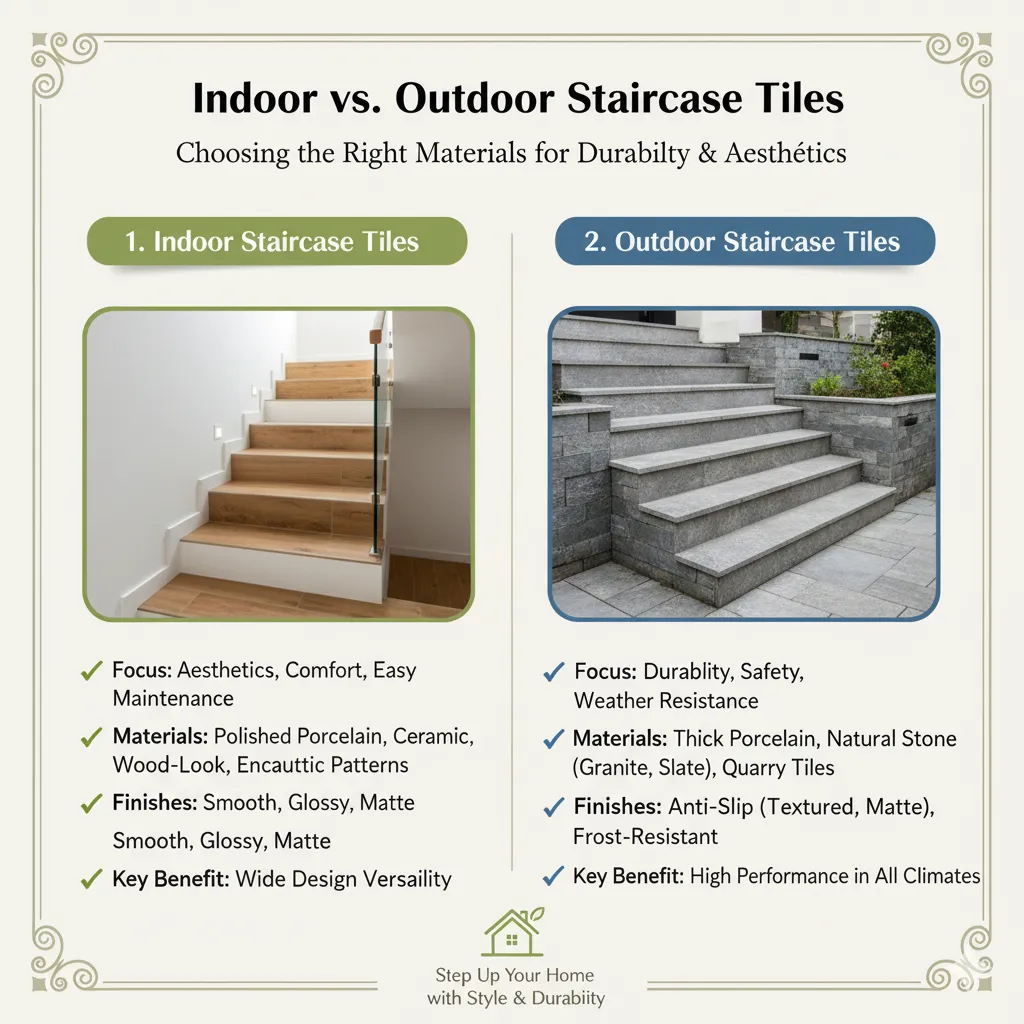
Indoor stairs: For interior staircases, ceramic, porcelain, or wood-look tiles are excellent options as they combine durability with style. Indoor tile stairs using floor tiles for staircase can help homeowners maintain a seamless aesthetic while ensuring safety and comfort. These materials offer greater design flexibility to match any décor theme from minimalist to luxurious allowing homeowners to achieve a seamless flow between rooms. They’re also easy to clean, resisting common indoor spills like food, dust, and household chemicals, which makes routine maintenance quick and hassle-free. Additionally, their smooth yet slip-resistant finishes provide a comfortable and safe walking surface, especially important in family homes with children or elderly members.
Outdoor stairs: For staircases exposed to the elements, porcelain, full-body, and textured tiles are the go-to materials because of their high density and low porosity, which help prevent water absorption and damage. Outdoor porcelain tiles or high-quality exterior staircase tiles resist harsh weather conditions and provide a safe walking surface, making them ideal for gardens, terraces, or entranceways. Their anti-slip and rugged textures also enhance safety by reducing the risk of slipping during wet conditions, while still offering an elegant look that complements patios, gardens, or entranceways.
Why it matters: Selecting the right tiles for indoor vs. outdoor environments is crucial to ensure the staircase remains both safe and visually appealing over time. Appropriate tile choices not only deliver long-lasting performance and reduced maintenance costs but also protect against issues like fading, cracking, or frequent replacements. This thoughtful approach improves the overall functionality, durability, and aesthetic value of your staircase, making it a smart long-term investment.
Design Ideas and Trends

Modern staircase design blends practicality with creative expression, allowing homeowners to showcase their style while ensuring safety and durability. Megan Cera one of the largest tile manufacturers and trusted exporters offers a diverse portfolio of tile types in various sizes, textures, and finishes, giving homeowners and designers the flexibility to bring these ideas to life.
-
Monochrome stairs: Using black, white, or neutral-colored tiles from Megan Cera’s extensive range creates a sophisticated and timeless look suitable for modern homes.
-
Patterned risers: Decorative tiled stair risers add a pop of color or intricate patterns, and with Megan Cera’s wide selection of designs, homeowners can easily transform each step into a statement element. Consider the best tiles for staircase applications transform your staircase into a functional centerpiece that enhances your home’s beauty and value for many years to come.
-
Textured finishes: Subtle textures improve grip while enhancing the visual depth and character of indoor or outdoor stairs. Megan Cera’s textured tiles combine safety with style, making them ideal for high-traffic areas.
-
Mixed materials: Combining wood-look tiles with porcelain or full body tiles from Megan Cera’s collection allows for layered, custom designs that are both stylish and practical, perfect for contemporary spaces.
Thoughtful integration of trends, along with the variety and quality offered by Megan Cera, ensures your staircase becomes a highlight of the home, balancing aesthetics with long-term usability.
Staircase Tile Maintenance
Proper maintenance keeps staircase tiles looking fresh and safe for years, whether they’re installed indoors or outdoors. Routine cleaning with a mild detergent and soft mop or cloth removes dust, spills, and debris before they can stain or scratch the surface. For outdoor staircases, regular sweeping and occasional pressure washing help remove dirt, algae, or moss that can make tiles slippery.
Promptly wiping up liquids and using pH-neutral cleaners prevents discoloration and protects the tile’s finish. Applying non-slip treatments or sealants (if recommended by the manufacturer) can further enhance safety and durability, especially on textured or outdoor tiles.
It’s also wise to inspect grout lines periodically; regrouting or resealing them every few years prevents moisture seepage and keeps the staircase looking neat. Placing mats or runners at entry points reduces grit that can cause scratches, while using furniture pads under heavy items minimizes impact damage.
With these simple practices, homeowners can ensure their staircase tiles remain attractive, slip-resistant, and long-lasting without the need for costly repairs or early replacement.
Expert Tips for Choosing Staircase Tiles
Experts recommend the following strategies for selecting the perfect staircase tiles:
-
Match your home’s décor: Ensure the tiles complement the color palette, furniture, and design theme of the home.
-
Prioritize safety: Choose textured, slip-resistant, or anti-skid tiles for areas prone to moisture or heavy traffic.
-
Consider location and usage: Outdoor steps need materials that withstand weather, while indoor steps can focus more on style and visual appeal.
-
Maintenance: Regular cleaning and proper care extend the life of your staircase and maintain the beauty of the tiles.
For homeowners looking for the best combination of style and durability, porcelain or full body tiles paired with thoughtful design choices are often the ideal solution.
FAQs
1. Which tile material is best for a staircase?
Porcelain and ceramic tiles are popular because they’re durable, slip-resistant, and easy to clean. Natural stones like granite or marble are also used for a premium look.
2. Are staircase tiles safe and slip-resistant?
Yes, but only if you choose anti-skid or textured finishes. Look for tiles with a high coefficient of friction (COF) to reduce slip risks.
3. What is the ideal thickness of staircase tiles?
Staircase tiles are generally thicker than wall or floor tiles around 10–12 mm or more to withstand heavy foot traffic.
4. Can I use floor tiles on stairs?
Yes, as long as they are heavy-duty, anti-slip, and cut to fit stair treads and risers properly.
5. How do I maintain staircase tiles?
Regular sweeping and mopping with a neutral cleaner prevents dust and stains. Avoid harsh acids or strong abrasives to protect the tile finish.
6. What size of tile works best for stairs?
Commonly used sizes are 300x600 mm or 600x600 mm cut to shape. Many brands also offer ready-made stair treads with nosing.
7. Which is better for stairs tiles or marble?
Tiles are cost-effective, easier to replace, and offer more anti-skid options. Marble gives a luxurious look but needs more maintenance and polishing.
8. Do staircase tiles need nosing?
Yes. Nosing adds a safer edge and prolongs the tile’s life by protecting corners from chipping.
9. Can outdoor stairs be tiled?
Absolutely. Use exterior-grade, frost-resistant, and anti-slip tiles specifically designed for outdoor conditions.
10. What color or finish of tile is best for stairs?
Matte or textured finishes in medium or darker tones hide dirt and are less slippery than glossy, light-colored tiles.
Find the perfect stair tiles
Conclusion
Choosing the right staircase tile requires a balance of safety, durability, and design. Indoor stairs often benefit from ceramic or wood-look tiles for their design versatility, while outdoor or high-traffic staircases perform best with porcelain or full body tiles for strength and longevity. Considering factors such as foot traffic, location, design trends, and maintenance needs ensures that your staircase is safe, durable, and visually appealing. If you are searching for sidiyo ki tiles for indoor or outdoor use, Megancera covers it all with a wide range of stylish and durable options. The right tile choice transforms your staircase into a functional centerpiece that enhances your home’s beauty and value for many years to come.



 Live Photos & Videos